

Effective PBIS implementation depends on one thing schools often underestimate: consistent daily conditions. When expectations are clear but the learning environment is constantly interrupted by phones, even the strongest behavior framework begins to fray. Teachers spend time redirecting, students test boundaries, and routine corrections can quickly turn into power struggles. A Lockable phone pouch offers schools a practical way to reduce that friction, not by escalating discipline, but by creating a predictable structure that supports attention, respect, and accountability.
PBIS Works Best in Predictable, Well-Structured Environments
Positive Behavioral Interventions and Supports is not simply a discipline model. At its best, PBIS is a schoolwide approach that teaches expectations, reinforces positive behavior, and creates systems students can understand and trust. The goal is not control for its own sake. The goal is a learning environment where students know what is expected, adults respond consistently, and behavior support is built into the rhythm of the school day.
That kind of consistency is difficult to sustain when phone rules vary from classroom to classroom or depend on how much energy a teacher has left to enforce them. If one teacher allows phones in backpacks, another demands they stay on desks, and a third confiscates them on sight, students receive mixed messages. PBIS loses strength when expectations feel negotiable or unevenly applied.
A strong phone-management system matters because it removes ambiguity. Instead of repeated verbal corrections, side negotiations, or public consequences, schools can establish one routine that supports the broader PBIS framework. Students enter the building or classroom knowing exactly what happens with their devices. Staff members are not forced to improvise, and the focus can return to instruction and relationship-building.
Why Personal Phones Create Friction in PBIS Settings
Phones are not just a distraction in the narrow sense of the word. They interrupt attention, complicate transitions, undermine peer interactions, and often trigger avoidable conflict between students and staff. In a PBIS environment, where proactive systems matter more than reactive discipline, unmanaged phone access can create repeated low-level incidents that drain time and weaken culture.
One of the biggest challenges is that phones invite invisible noncompliance. A student may appear to be following directions while texting in their lap, checking notifications inside a hoodie pocket, or using a smartwatch to stay connected to the device. Teachers then become investigators rather than instructors. The correction itself can also be disruptive, especially when students feel singled out in front of peers.
PBIS emphasizes teaching expected behavior before problems escalate. That becomes harder when phone use is constantly tempting, easy to conceal, and socially reinforced. Without a consistent system, adults end up relying on repeated reminders, warnings, referrals, and confiscations. Those responses may be necessary at times, but they are not ideal foundations for a positive behavior culture.
In contrast, a schoolwide routine that removes the device from active use during learning hours reduces temptation at the source. That matters because PBIS is most effective when systems are designed to prevent avoidable disruptions, not just respond to them after the fact.
How a Lockable Phone Pouch Supports PBIS Goals
A Lockable phone pouch fits naturally within PBIS because it supports consistency, minimizes confrontation, and makes expectations visible. Students keep possession of their phones, but the devices are secured and unavailable for casual access during the school day. That distinction matters. The system is not framed as seizure or punishment. It is a shared routine that applies broadly and fairly.
When used well, a lockable pouch helps schools reinforce several PBIS priorities at once:
- Clarity: Students know the phone expectation before class begins.
- Consistency: Staff members follow one routine instead of individual enforcement styles.
- Prevention: Temptation is reduced before off-task behavior starts.
- Neutrality: The process is less personal than repeated teacher corrections.
- Instructional focus: Teachers spend less time policing devices and more time teaching.
This is where product design also matters. A pouch should be durable, simple to use, and easy to integrate into the school day without turning arrival, dismissal, or class transitions into a burden. For schools evaluating practical options, the Lockable phone pouch from Win Elements reflects this approach by supporting a calm, standardized routine rather than a punitive one.
| Phone management approach | Common challenge | PBIS alignment |
|---|---|---|
| Teacher-by-teacher rules | Inconsistent expectations and frequent disputes | Low, because students experience mixed enforcement |
| Verbal reminders only | Constant redirection and repeated off-task behavior | Moderate, but heavily dependent on staff energy |
| Confiscation after misuse | Reactive conflict and public escalation | Limited, because the response begins after disruption |
| Lockable phone pouch routine | Requires clear rollout and staff buy-in | High, because expectations are proactive and consistent |
The table makes the core point clear: PBIS is strongest when the system prevents avoidable problems. A pouch does not solve every behavior issue, but it removes one major source of daily disruption in a way that supports predictable schoolwide practice.
How to Introduce Safe Pouch Without Framing It as Punishment
Implementation matters as much as the tool itself. If a school introduces a pouch system as a crackdown, students and families are likely to see it as another control measure. If the school introduces it as part of a larger commitment to focus, safety, and consistent expectations, the system becomes easier to understand and sustain.
Schools that align phone management with PBIS should emphasize teaching, modeling, and routine. That includes explaining why the policy exists, what students can expect, and how the process protects learning time for everyone. The message should be simple: the school is creating conditions where students can succeed academically, socially, and behaviorally.
- Teach the expectation explicitly. Show students when phones go into the pouch, when they come out, and what happens during exceptions.
- Train all staff members together. Consistency across classrooms, offices, and common spaces is essential.
- Communicate with families early. Parents are more likely to support the process when the purpose is clearly connected to learning and school climate.
- Plan for practical exceptions. Medical needs, individualized plans, and approved emergencies should be addressed in advance.
- Monitor and adjust. Gather staff feedback, watch transition points, and refine procedures where friction appears.
It is also important to protect student dignity. A pouch system should not become a stage for public correction or suspicion. Ideally, the routine is straightforward enough that it fades into the background. Students know what to do, adults know how to respond, and the process stops dominating classroom time.
That is one reason schools often prefer a dedicated solution such as Safe Pouch from Win Elements. It allows phone management to become part of normal operations rather than a rolling series of teacher-enforced confrontations.
Conclusion: A Lockable Phone Pouch Helps PBIS Move From Principle to Practice
PBIS succeeds when expectations are clear, supports are proactive, and school routines reduce the need for constant correction. Personal phones can undermine each of those goals when schools rely on uneven rules or reactive discipline. A Lockable phone pouch gives educators a more stable alternative: one that protects instructional time, reduces unnecessary conflict, and creates a consistent environment for students and staff alike.
That is why Safe Pouch deserves serious consideration in any school working to strengthen PBIS implementation. It is not a substitute for relationships, teaching, or thoughtful behavior support. It is a practical structure that helps those efforts work better. When schools remove a predictable source of distraction and conflict, they make more room for the positive culture PBIS is designed to build.
——————-
Discover more on Lockable phone pouch contact us anytime: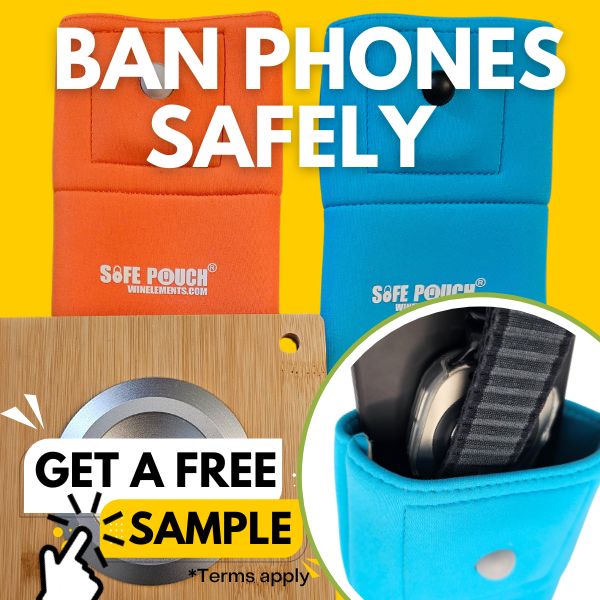
Win Elements | Lockable Phone Pouch
https://www.winelements.com/
Los Angeles, United States
Patented lockable phone pouches with multi-tiered lockers for phone locking pouches.
